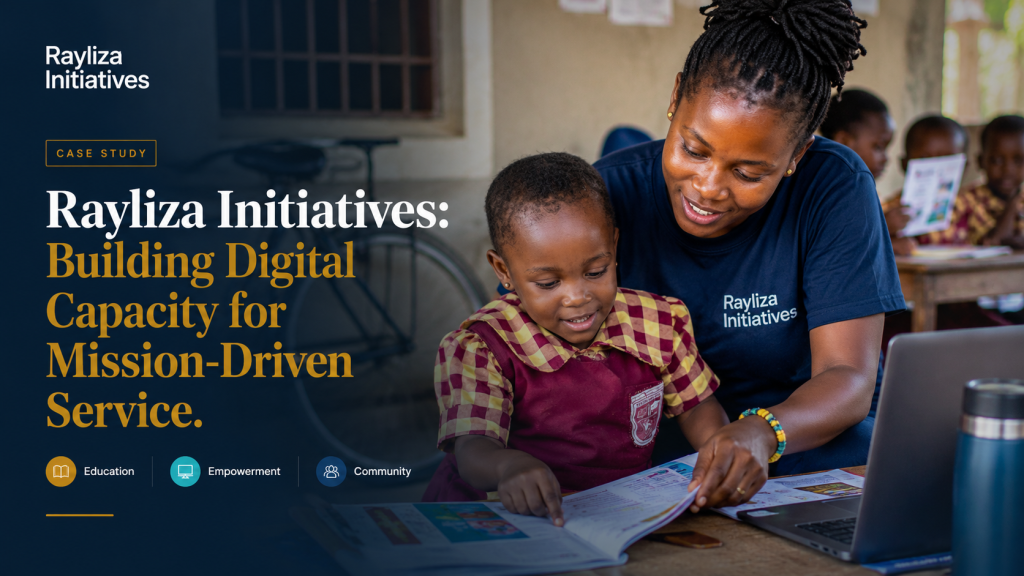
Rayliza Initiatives is a mission-driven organization working at the intersection of education, service, and community development. Like many organizations of its kind, the work it does is deeply human — focused on the people it serves rather than the systems that support that service. This project story explores the digital infrastructure needs behind mission-driven organizations, and the role practical technology plays in strengthening service delivery, accountability, and long-term capacity.
The Nature of Mission-Driven Work
Organizations like Rayliza Initiatives navigate a complex operational reality. They manage programs, people, communications, and records — often across limited staff and constrained resources. The work they do matters deeply, but the systems supporting that work are often fragmented, manual, and difficult to scale.
Communication happens across email threads. Records live in spreadsheets or shared drives. Reporting to stakeholders, partners, or funders often requires assembling information by hand from multiple sources. None of this reflects a failure of intention — it reflects how mission-driven organizations typically grow: around their programs, not their infrastructure.
Why Operational Clarity Matters
When an organization’s operational systems are fragmented, the consequences are rarely dramatic in any single moment. They accumulate: a follow-up that slips, a record that is difficult to find, a report that takes longer than it should, a communication that arrives late. Over time, these friction points pull staff attention away from service work and toward administrative work that should not require human judgment to maintain.
The goal of better systems is not to make mission-driven organizations more corporate. It is to make their service more reliable — by reducing the overhead that keeps teams from focusing on what actually matters.
Organizations that serve others often under-invest in their own operational infrastructure. The case for better systems is not efficiency for its own sake — it is accountability to the people being served.
What Organized Digital Systems Support
For an organization like Rayliza Initiatives, better digital infrastructure can strengthen several areas of ongoing operations:
- Communication workflows — structured processes for reaching participants, partners, and stakeholders without relying on manual follow-up for each touchpoint
- Records and documentation — organized, searchable records that make it possible to report, review, and improve without manual assembly
- Operational structure — clear task ownership, status visibility, and accountability across programs and staff
- Capacity building — systems that support organizational growth without requiring proportional increases in administrative overhead
- Service delivery — digital tools that help teams deliver services more consistently, communicate more clearly, and track progress more reliably over time
Where Servorex Fits
Servorex exists specifically to build systems for organizations like Rayliza Initiatives — mission-driven, people-focused, and operating in environments where technology has historically either been absent or poorly suited to the actual work being done.
The Servorex approach begins with understanding the operational reality of the organization: how work actually flows, where friction occurs, what accountability looks like in practice, and what staff spend time on that technology could support or automate. From that starting point, practical systems are designed and configured — not to add complexity, but to reduce it.
This case study is in development. More specific detail about Rayliza Initiatives’ systems and outcomes will be documented as the partnership matures.
Building systems that serve mission-driven organizations.
If your organization is ready to move from fragmented tools to reliable digital operations, we want to hear from you. Start a conversation about your operational needs or explore what Servorex builds.